


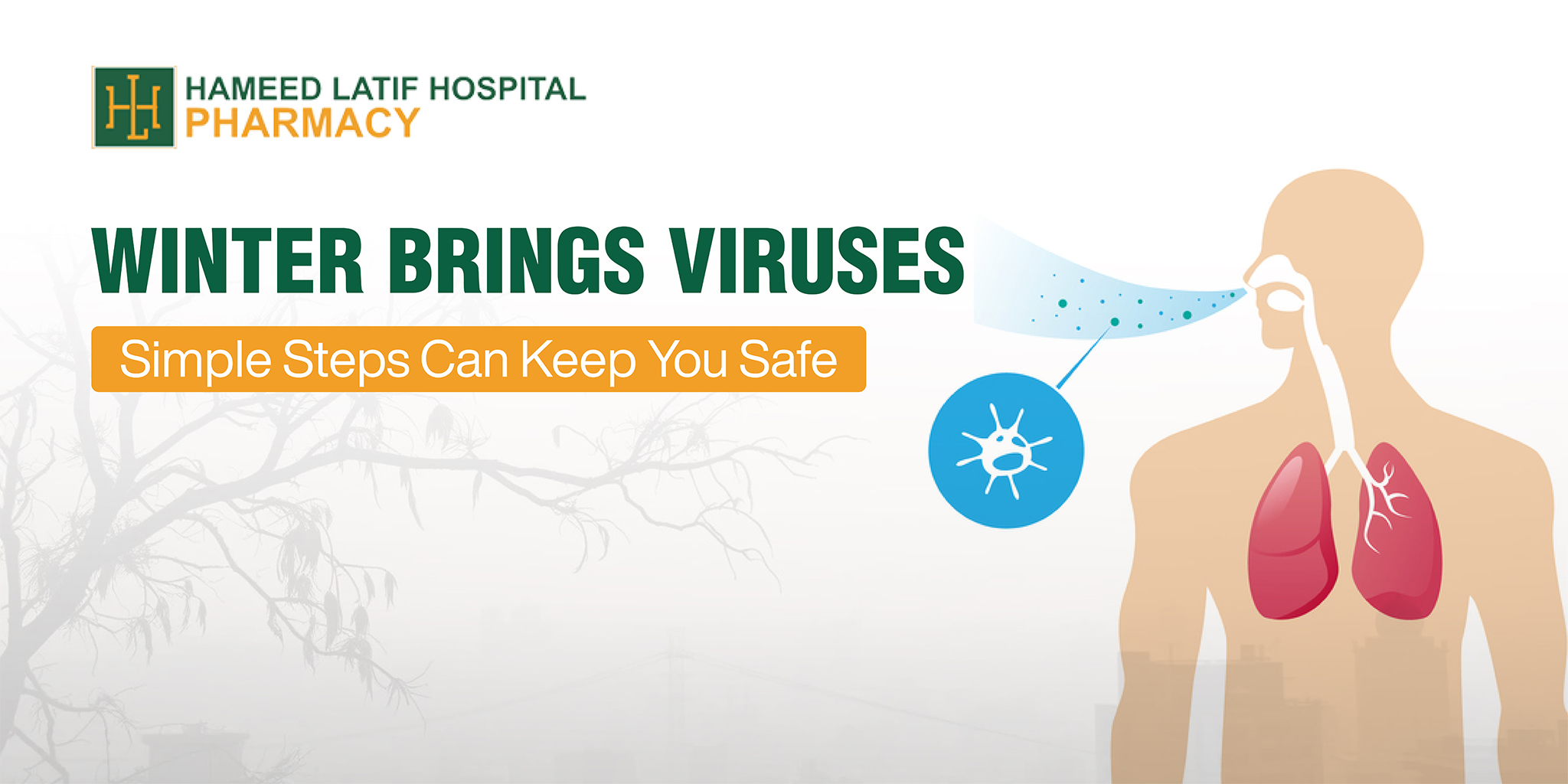
Every winter, the cold and flu season intensifies as falling temperatures, dry air, and close indoor interactions allow viruses to spread rapidly. From October to February, families often experience repeated episodes of fever, cough, congestion, and fatigue as seasonal infections circulate in homes, schools, and workplaces.
Health Impacts:
Cold and flu viruses irritate the respiratory tract, causing a sore throat, runny nose, cough, fever, headache, and body aches. In more severe cases, they can lead to bronchitis, sinus infections, or pneumonia. Children, the elderly, pregnant women, and individuals with weakened immunity face the highest risk of complications and require extra care.
Prevention and Protection:
Limit exposure: Avoid close contact with sick individuals and disinfect frequently touched surfaces.
Protect yourself: Wash hands regularly, use hand sanitizers, and wear masks in crowded spaces.
Stay healthy: Stay hydrated, eat Vitamin-C-rich foods, rest well, and drink warm fluids for relief.
Seek care early: Persistent high fever, difficulty breathing, or worsening symptoms require prompt medical attention.
The Need for Collective Awareness!
Healthcare authorities continue to promote vaccination, hygiene education, and timely medical guidance during peak cold and flu months. As responsible citizens, we can help reduce the spread by staying home when sick, encouraging good hygiene habits, and supporting awareness efforts.
Cold and flu may be seasonal, but with consistent preventive measures and shared responsibility, we can make our winters healthier, safer, and easier to navigate.
Writer: Faiza Nadeem (Deputy Manager Pharmacy, Hameed Latif Hospital, Lahore.)